
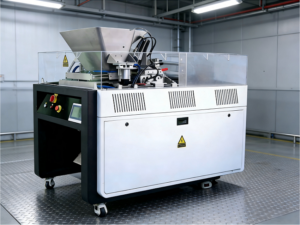
An automatic cork packaging machine is most useful when its bagging and sealing steps are planned together with the upstream counting process. The right configuration depends on the cork sizes, the required quantity per bag, the packaging material, and how finished bags move to the next station.
Fangshiheng’s Automatic Cork Packaging Machine can be configured for counted cork stopper bagging, vacuum extraction, optional SO2 filling, sealing, and connection to downstream carton handling. This article outlines the decisions to make before specifying a packaging station or an integrated line.
Start With the Cork and Bag Specification
Confirm the cork diameter and length range, target quantity per bag, bag dimensions, film material, and sealing requirement. These inputs determine how corks are presented to the bagging station and whether one format or several changeover recipes are needed.
A packaging target should be tested with real cork samples and the intended bag material. A cycle time measured on one format should not be assumed for other cork sizes, fill quantities, or upstream feeding methods.
Plan the Counting-to-Bagging Handoff
Packaging capacity is affected by how counted corks arrive at the machine. A line may use manual loading, a conveyor, or a visual cork counting machine. For each option, define the batch signal, transfer path, and what happens when the packaging station pauses.
Where counting and packaging are connected, the two stations should be evaluated as one workflow. Confirm how batches are separated, how an incomplete count is handled, and how the next bag starts. Fangshiheng also offers an integrated cork counting and packaging line for projects that need a coordinated layout.
Select the Packing Process
The packaging sequence may include bag filling, vacuum extraction, optional SO2 filling, sealing, and finished-bag discharge. SO2 is a configuration option, not a default requirement for every customer. The choice of gas process, bag material, and sealing method should be confirmed against the buyer’s own product, storage, and regulatory requirements.
Ask how the machine confirms that a bag is present, what checks are available before sealing, and how operators respond to a stopped cycle. These details matter as much as nominal machine speed when assessing a production line.
Check the Full Line, Not One Speed Figure
A reliable output estimate requires the actual cork samples, bag format, quantity per bag, packaging sequence, and chosen loading method. Upstream counting and downstream collection or carton handling can limit throughput even when the sealing station has spare capacity.
Before comparing proposals, request a test or a layout review using the intended products and workflow. Document the measurement conditions so that any quoted cycle time or capacity can be compared fairly. This page does not claim a fixed percentage production increase or a universal seconds-per-bag figure.
Information to Send for a Configuration Review
- Cork samples or drawings showing the full size range.
- Target count per bag and expected packaging formats.
- Bag material, dimensions, and sealing requirements.
- Whether vacuum extraction or optional SO2 filling is required.
- Current counting method, expected output, and available floor space.
- Downstream needs such as collection, carton loading, or carton sealing.
These details help determine whether a standalone packaging unit or an integrated line is the better fit. For an example of a broader end-of-line concept, see the cork stopper packing line article.
Discuss Your Cork Packaging Line
Review the Automatic Cork Packaging Machine and send your samples, bag specification, current process, and target output through Contact Us. Fangshiheng can then review the handling and packaging configuration for your application.