
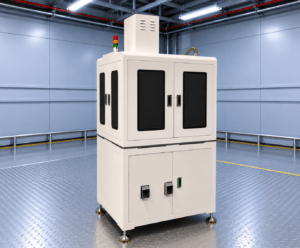
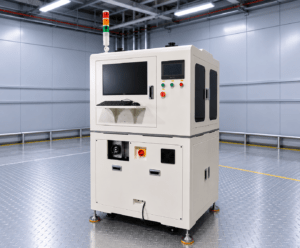
CO2 cork laser marking should be confirmed with actual cork samples before the final machine configuration is selected.
A logo file alone is not enough to confirm a laser marking project. Natural cork surface condition, cork size, marking position, artwork detail, and the required visual effect can all affect the final result.
Fangshiheng reviews cork samples and marking files before confirming whether the project is suitable for a dual-end or multi-side CO2 marking layout. This process helps determine the marking position, positioning method, fixture design, laser parameters, and downstream automation connection.
Why Sample Testing Matters
Natural cork stoppers are not identical.
Cork diameter, length, surface texture, color, density, and visible natural features can vary between samples. These differences may influence the appearance of a logo, text, batch code, or decorative pattern after laser marking.
Sample testing allows the customer and Fangshiheng to review the actual engraving effect before final machine design.
The test should confirm:
- Whether the required artwork is clear on the actual cork
- Whether the marking position is correct
- Whether the pattern size is suitable
- Whether the marking effect meets the approved visual requirement
- Whether the cork needs a fixture, CCD centering, or another positioning method
- Whether the machine should mark one, two, or multiple cork surfaces
This avoids choosing a marking layout based only on a drawing or digital artwork file.
Prepare Actual Cork Samples
The first requirement is to provide actual cork samples.
Samples should represent the corks used in regular production. If the factory uses several cork sizes or materials, samples should be provided for each type.
Important sample information includes:
- Cork length
- Cork diameter
- Cork material type
- Cork surface condition
- Cork color or treatment condition
- Natural cork variation
- Required marking side
- Whether the cork is natural, agglomerated, synthetic, or another type
The test result for one cork size or surface condition should not automatically be applied to a different cork specification.
Prepare the Artwork File
The artwork file is another essential part of the CO2 cork laser marking project.
The customer should provide the required logo, text, code, pattern, or decorative design in a clear digital format. The final marking result depends on the artwork detail and the available marking area on the cork surface.
Before testing, confirm:
- Logo or pattern file
- Required text or code content
- Required marking size
- Required marking location
- Required marking direction
- Required contrast or visual effect
- Whether the artwork changes between orders
- Whether batch codes or variable data are required
For projects that previously used ink printing, digital artwork changes can be more flexible than producing a new printing mold. However, the new artwork should still be tested on actual cork samples before approval.
Confirm the Required Marking Sides
The required marking sides determine the machine layout.
Some cork projects need marking on one surface. Others need branding on both end faces or marking on multiple sides. The customer should clearly identify every required marking position before the sample test.
Fangshiheng provides the Dual CO2 Laser Marking Machine for Cork for projects that require marking on both cork ends.
For body marking, side marking, logo marking, batch codes, or customized marking layouts, the CO2 Cork Stopper Marking Machine can be evaluated according to the cork sample and required process.
The final machine choice should follow the approved marking layout, not only the desired production capacity.
Positioning Before CO2 Cork Laser Marking
Stable positioning is important for CO2 cork laser marking.
If the cork position changes during the marking process, the logo, code, or pattern may be misaligned. The positioning method should match the cork size, marking side, artwork location, and required production rhythm.
Depending on the project, Fangshiheng can evaluate:
- Automatic cork feeding
- Customized fixtures
- Cork orientation
- CCD centering
- Marking-position confirmation
- Automatic discharge
- Connection with visual inspection
- Connection with counting and packaging equipment
For natural cork, positioning is especially important because the material surface and shape can vary between individual stoppers.
Confirm Whether Marking Inspection Is Required
Marking inspection is different from checking the cork before marking.
Front-end inspection can remove corks with unsuitable dimensions, cracks, deformation, incomplete sections, or mixed specifications before they enter the marking machine.
Downstream pattern inspection checks the completed marking result. It can be configured to identify issues such as missing marks, incomplete graphics, unclear patterns, or incorrect marking positions according to the confirmed inspection requirement.
The customer should confirm whether the project needs:
- Cork inspection before marking
- Marking-result inspection after laser processing
- Reject removal for unsuitable corks
- Connection with counting or packaging equipment
This helps Fangshiheng plan the complete workflow instead of only selecting a laser marking station.
Connection With the Cork Production Line
CO2 cork laser marking can work as a standalone process or become part of a connected line.
For example, a Cork Centrifugal Feeder can provide a more stable cork supply before the marking machine.
After marking and inspection, accepted corks can move to a Cork Visual Counting Machine for quantity control before bagging or carton packing.
For full-line projects, Fangshiheng can review feeding, inspection, marking, counting, vacuum packaging, carton handling, and I/O signal requirements as one production process.
Related equipment can be reviewed in the Cork Processing Machinery category.
What to Send Fangshiheng for a Sample Test
Before requesting CO2 cork laser marking sample testing, please provide:
- Actual cork samples
- Cork length and diameter
- Cork material information
- Required marking sides
- Artwork files
- Required marking position
- Required marking size
- Required visual effect
- Target production output
- Existing feeding method
- Requirement for marking inspection
- Requirement for reject removal
- Requirement for counting or packaging connection
- Photos or videos of the current production process
With this information, Fangshiheng can recommend a suitable marking layout and confirm whether the project needs a standalone machine or an integrated cork automation line.
Fangshiheng CO2 Cork Laser Marking Solution
Fangshiheng provides CO2 cork laser marking machines designed for cork stopper producers.
The solution can be configured around the actual cork sample, marking artwork, required marking sides, positioning method, feeding method, inspection requirement, and downstream process.
The final recommendation may include a dual-end marking machine, a multi-side marking machine, a customized fixture, CCD centering, automatic feeding, visual checking, reject removal, or connection with counting and packaging equipment.
Buyers can review Fangshiheng’s complete Products section for more cork processing and automation equipment.
Contact Fangshiheng
If your factory is planning a CO2 cork laser marking project, send Fangshiheng your cork samples, artwork file, marking requirement, and current production information.
Contact Fangshiheng to arrange a sample review and discuss the right CO2 cork laser marking configuration.
Confirmed Internal Links Included
- Dual CO2 Laser Marking Machine for Cork: https://fangshiheng.com/project/fully-automatic-co2-dual-end-laser-marking-machine-for-cork-stoppers/
- CO2 Cork Stopper Marking Machine: https://fangshiheng.com/project/fully-automatic-co2-laser-marking-system-3-sided-cork-stopper-marking/
- Cork Centrifugal Feeder: https://fangshiheng.com/project/cork-centrifugal-feeder/
- Cork Visual Counting Machine: https://fangshiheng.com/project/automated-production-equipment4/
- Cork Processing Machinery: https://fangshiheng.com/project_category/cork-processing-machinery/
- Products: https://fangshiheng.com/projects/
- Contact Us: https://fangshiheng.com/contact-us/
Facts to Confirm Before Publication
- Confirm the final public machine models for dual-end and multi-side marking.
- Confirm which marking sides are supported by each model.
- Confirm whether CCD centering is standard or optional for each machine.
- Confirm the approved artwork-file formats.
- Confirm the actual cork size range supported by each configuration.
- Confirm whether front-end cork inspection and downstream marking inspection are available for the project.
- Confirm whether reject removal is standard or optional.
- Confirm whether product photos, engraving samples, and operating videos are approved for publication.
- Confirm that Automation Insights is the preferred WordPress category.
Image and Video Suggestions
- Main image: CO2 cork laser marking machine with cork feeding and marking area visible.
- Detail image: cork sample before and after laser marking.
- Detail image: logo, text, code, and decorative pattern samples.
- Process image: CCD centering or cork positioning before marking.
- Process image: marked corks moving to inspection or collection.
- Video: cork feeding, positioning, CO2 laser marking, pattern inspection, and reject removal.
- Recommended image alt text: CO2 cork laser marking sample testing for natural cork stoppers.