
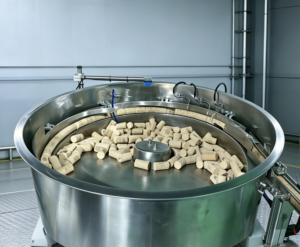
A cork centrifugal feeder is used at the beginning of a cork automation line to keep cork stoppers moving into the next process at a stable pace. For many cork producers, feeding is the first bottleneck: manual loading changes from operator to operator, and downstream machines cannot run steadily when the incoming cork flow is uneven.
Fangshiheng uses cork feeding equipment to support visual counting, inspection, CO2 laser marking, packaging, and complete custom cork production lines. The goal is simple: reduce repeated manual loading and give the next machine a cleaner, more predictable material flow.
Why Cork Feeding Becomes a Bottleneck
Natural cork stoppers vary in size, surface texture, and rolling behavior. When operators feed corks by hand, the line may run well for a short time and then slow down because the next station is either waiting for material or receiving too much material at once.
A feeder does not only increase speed. It improves the rhythm of the line. This is especially important before machines that need stable spacing, such as visual counting machines, laser marking equipment, inspection systems, and packaging machines.
What a Cork Centrifugal Feeder Does
The centrifugal feeder stores corks in a feeding bowl or hopper and guides them toward an outlet through controlled motion. The outlet can be matched with a chute, conveyor, elevator, or custom interface according to the next machine in the line.
- It reduces manual feeding work at the front of the production line.
- It helps downstream machines receive corks more consistently.
- It can be adjusted according to cork diameter, length, and sample condition.
- It supports new automation lines and upgrades of existing cork workshops.
Where It Fits in a Cork Production Line
A cork centrifugal feeder can work as a standalone feeding station, but it is most useful when it is connected with a downstream process. Typical line positions include:
- Before a Cork Visual Counting Machine.
- Before CO2 cork laser marking or hot stamping equipment.
- Before cork diameter inspection, defect inspection, or sorting equipment.
- Before an Automatic Cork Packaging Machine.
Key Selection Points
Before choosing a feeder, the most important details are cork size range, expected output, the next machine’s receiving method, and workshop layout. A feeder that works well for one cork size may need different outlet design or speed adjustment for another product.
| Cork sample | Diameter, length, surface condition, and mixed-size tolerance |
| Output target | Required cork flow per minute or per hour |
| Next process | Counting, marking, inspection, packaging, or custom transfer |
| Connection layout | Outlet direction, height, conveyor position, and available space |
When to Choose a Custom Feeder
A custom feeder is recommended when the cork line has limited space, multiple cork sizes, a special discharge height, or a strict connection requirement with an existing machine. Fangshiheng can review sample corks, videos of the current process, and the target downstream equipment before confirming the feeding method.
Related Fangshiheng Equipment
If you are planning a cork feeding project, start with the Cork Centrifugal Feeder, then compare the Cork Visual Counting Machine and other cork processing machinery. You can also browse the complete equipment catalog or send project details through Contact Us.