
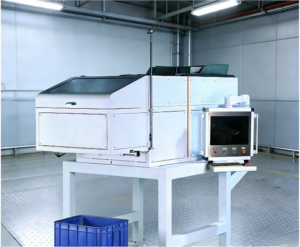
A cork visual counting machine is used to count cork stoppers by actual piece quantity before bagging, vacuum packaging, carton packing, or downstream transfer. It helps cork producers avoid the uncertainty of manual counting and the variation that can appear when counting only by weight.
For cork factories and wine packaging suppliers, accurate quantity control is important because every bag or carton must meet the required count. Visual counting gives the line a repeatable way to release each batch before packaging.
Why Visual Counting Matters for Cork Packaging
Natural cork stoppers are not identical. Weight, surface condition, and small size differences can affect manual or weight-based counting. A visual counting system checks the actual corks passing through the machine and releases the required quantity for the next packaging step.
This is especially useful when the line must prepare counted cork bags for storage, shipment, winery use, or export packaging.
How the Machine Works
The machine receives corks from a feeder, elevator, conveyor, or manual loading station. Corks pass through the counting area, where the vision system identifies and counts them. When the target quantity is reached, the system releases the batch to a collection point or packaging machine.
- Corks are fed into the machine at a controlled pace.
- The vision area detects cork stoppers as they pass through the counting zone.
- The control system compares the count with the required target quantity.
- Counted corks are released to bagging, vacuum packaging, carton packing, or collection.
- Settings can be adjusted according to cork size and target batch quantity.
Key Modules in a Visual Counting System
- Feeding interface: connects with a cork feeder, conveyor, elevator, or manual loading station.
- Vision counting area: identifies corks and supports stable piece-count control.
- Control system: manages target quantity, release timing, and line signals.
- Discharge section: transfers counted corks to the next process.
- Optional integration: connects with packaging, carton handling, or custom automation equipment.
Typical Applications
Cork visual counting machines are commonly used before cork packaging, especially when factories need a stable number of corks per bag or carton.
- Counting cork stoppers before vacuum packaging.
- Preparing counted cork batches for bagging or carton packing.
- Reducing repeated manual recounting before shipment.
- Building integrated cork feeding, counting, and packaging lines.
Integration With Feeding and Packaging
For stable line operation, visual counting is often connected with a Cork Centrifugal Feeder at the front and an Automatic Cork Packaging Machine at the back. This creates a smoother workflow from cork feeding to accurate counting and final packaging.
Related Fangshiheng Equipment
For a real product configuration, review the Cork Visual Counting Machine or the integrated Cork Visual Counting Machine & Cork Packaging line. For complete cork automation, compare related cork processing machinery, browse the equipment catalog, or contact Fangshiheng through Contact Us.
Related Cork Counting and Packaging Resources
For a real project example, read the Automatic Cork Stopper Packing Line case study. Related Fangshiheng equipment includes the Cork Visual Counting Machine, the integrated Cork Visual Counting Machine & Cork Packaging line, and the Automatic Cork Packaging Machine. You can also browse cork processing machinery or send your cork size, target quantity, and packaging format through Contact Us.